Sport turned inside out
Are we teaching sport… or just repeating movements? Why do we still teach sport as if we were programming robots?
Line up. Dribble the ball to the cone. Come back. Repeat. Now shoot. Again. One more time.
For decades, sport teaching was based on a linear, technicist model: first you learn the isolated skill, then you apply it in the game. But there is a serious problem with that.
The game is not linear. The game is unpredictable. The game demands decisions. The game demands reading. The game demands autonomy. And autonomy is not born from mechanical repetition.
International research has been questioning the traditional model of sport teaching for more than 30 years. Jean Côté, with the Developmental Model of Sport Participation (DMSP), shows that children who experience environments rich in deliberate play:
- Stay in sport longer;
- Develop better decision-making;
- Show greater motor creativity;
- Have lower rates of early dropout.
In Brazil, authors like João Batista Freire and Greco & Benda have argued for years that sport initiation must respect the logic of the game, not just the logic of the technical gesture. Because a gesture is not a game.
When we teach only the movement:
- The child learns how to execute;
- But not when to use it;
- Nor why to use it;
- Nor what to do if it does not work.
The result? Dependent, insecure players who look to the bench for guidance at every mistake. And perhaps the biggest problem: they are afraid to decide.
What truly shapes a player?
A smart player is not the one who executes a skill perfectly in training. It is the one who reads the space, perceives the opponent, decides under pressure, takes risks with boldness and creativity, and learns from mistakes.
The game is a cognitive environment. Sport is also decision-making. And decision-making is a skill for life.
But what about technique?
That is the question that always comes up. Is technique important? Of course it is. But technique must serve the intelligence of the game — not stand isolated from it.
Contextual learning (studies in the ecological pedagogy of sport) shows that technique evolves better when taught within real situations, with a problem to solve. The brain learns better when it has to decide. Not when it merely repeats.
What we do at H10
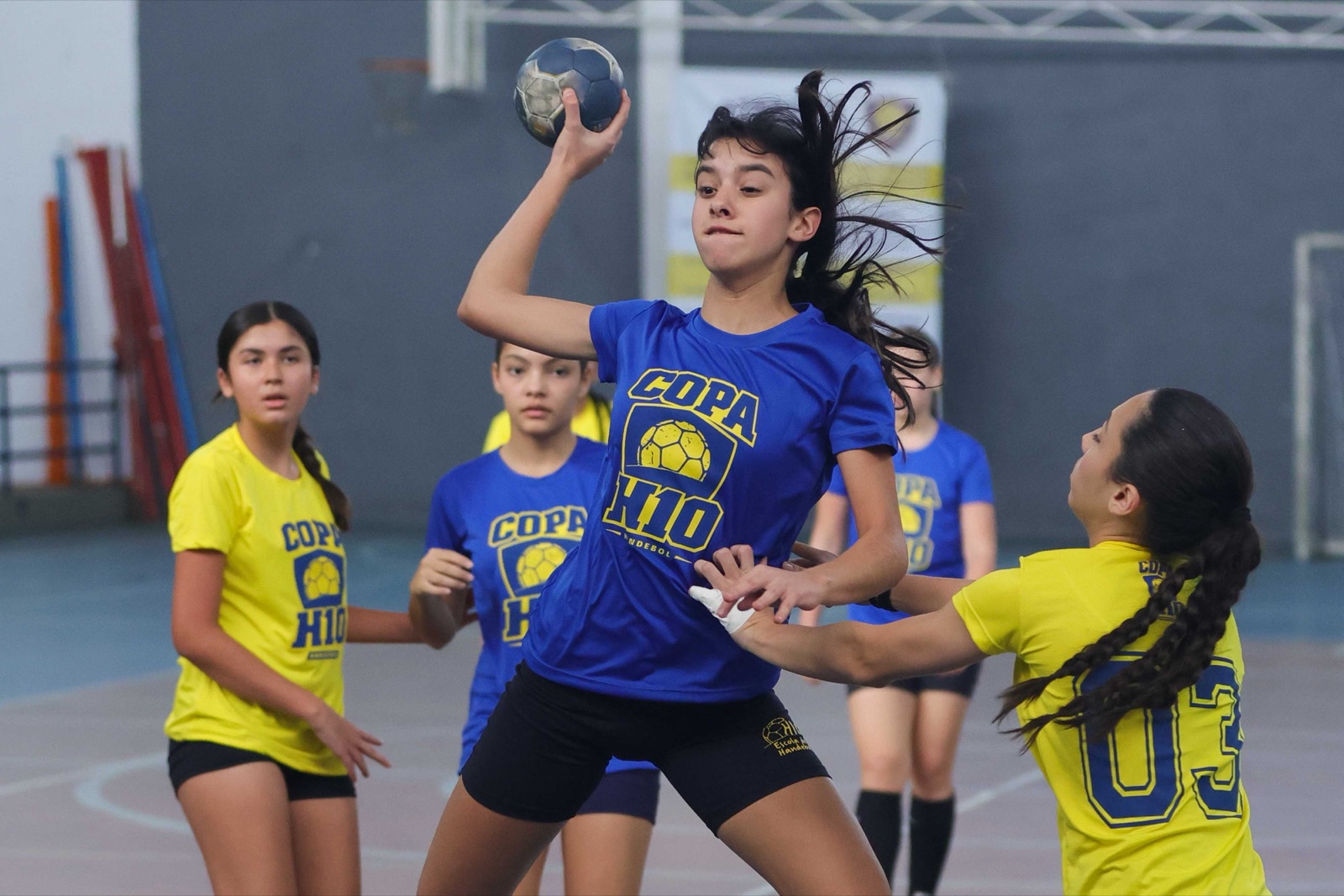
At H10 Sports School, we do not start with the gesture. We start with the game. We use:
- Small-sided games;
- Problem situations;
- Pedagogical questions;
- Challenging progressions;
- Spaces for decision.
Our coach is not a "giver of answers". He is a mediator. He prompts reflection:
- "What was the best option there?"
- "What did you notice?"
- "Why did you choose that pass?"
We don't want to shape executors, we want to shape protagonists. We don't want to shape children who only obey instructions, we want to shape young people who think, create and lead.
Because sport can be much more than medals: it can be an environment for human development.